
Electrofusion welding of PE pipes
We join pipes with fittings that have an embedded heating wire and are fused by electric current. This is the method for trenches, manholes and tie-ins to existing pipelines, where a butt fusion machine will not fit.
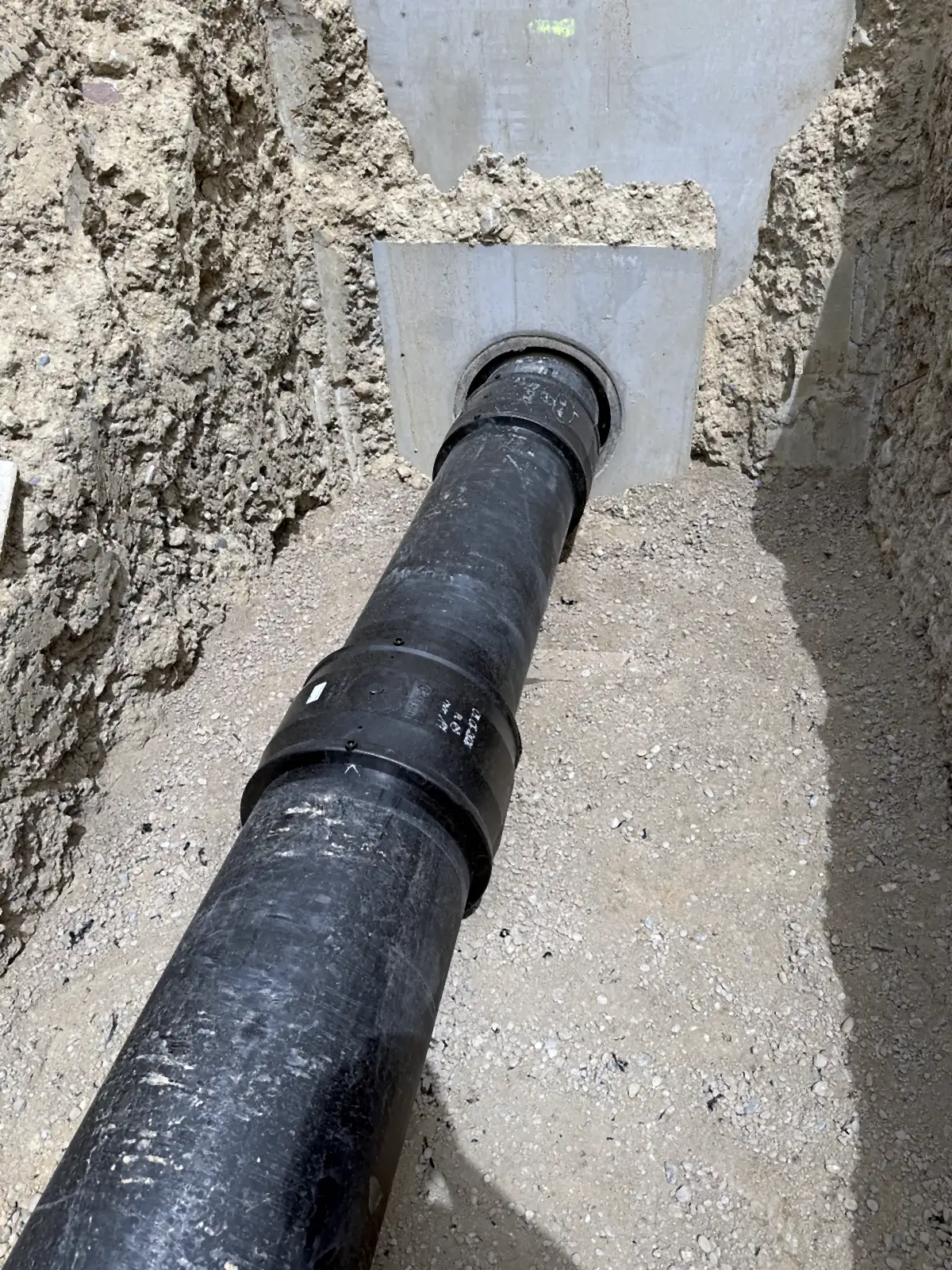
How electrofusion welding works
The fitting (coupler, elbow, tee or tapping saddle) has an embedded heating wire. When the welding unit is connected, the current heats the wire, and the plastic of the fitting and the pipe melts and fuses into one piece.
The pipes do not need to move relative to each other, and the equipment is compact. That is why we choose this method wherever space is tight: in a trench, in a manhole, next to a wall or when tying into a live installation.
Joint quality depends largely on preparation: a clean, scraped pipe surface and correct insertion into the fitting. This is where we put most of our attention, because the welding unit controls the fusion itself.
When to use this method
- work in trenches and manholes
- tie-ins to existing pipelines
- repairs and modifications of PE installations
- confined spaces where a butt fusion machine will not fit
- branch connections on live pipelines using tapping saddles
When another method is better
- long runs and prefabrication with many joints: butt fusion welding is usually cheaper
- sheets, tanks and basins: extrusion welding
- PVDF installations for high-purity media: IR welding
Materials
- PE
How the welding is carried out
- 01
We prepare the pipes
We cut the pipes square and mark how deep they will go into the fitting.
- 02
We scrape the surface layer
We use a scraper to remove the oxidised layer from the pipe surface and then degrease it.
- 03
We assemble the fitting
We insert the pipes into the fitting and secure them so that nothing moves during welding.
- 04
We weld
The welding unit reads the fitting data from its barcode and runs the entire welding cycle automatically.
- 05
We cool and inspect
The joint cools without load. We check the fusion indicators on the fitting.
Welding and cooling times are determined by the data of the specific fitting.
Inspection and documentation
After each weld, we check the fusion indicators on the fitting and the condition of the joint. Every weld is recorded: semi-automatic machines log the data themselves, and for manual work we fill in the record on the form for this method. Before handover, we carry out a leak or pressure test. We hold DVS certificates and a TÜV certificate for this method.
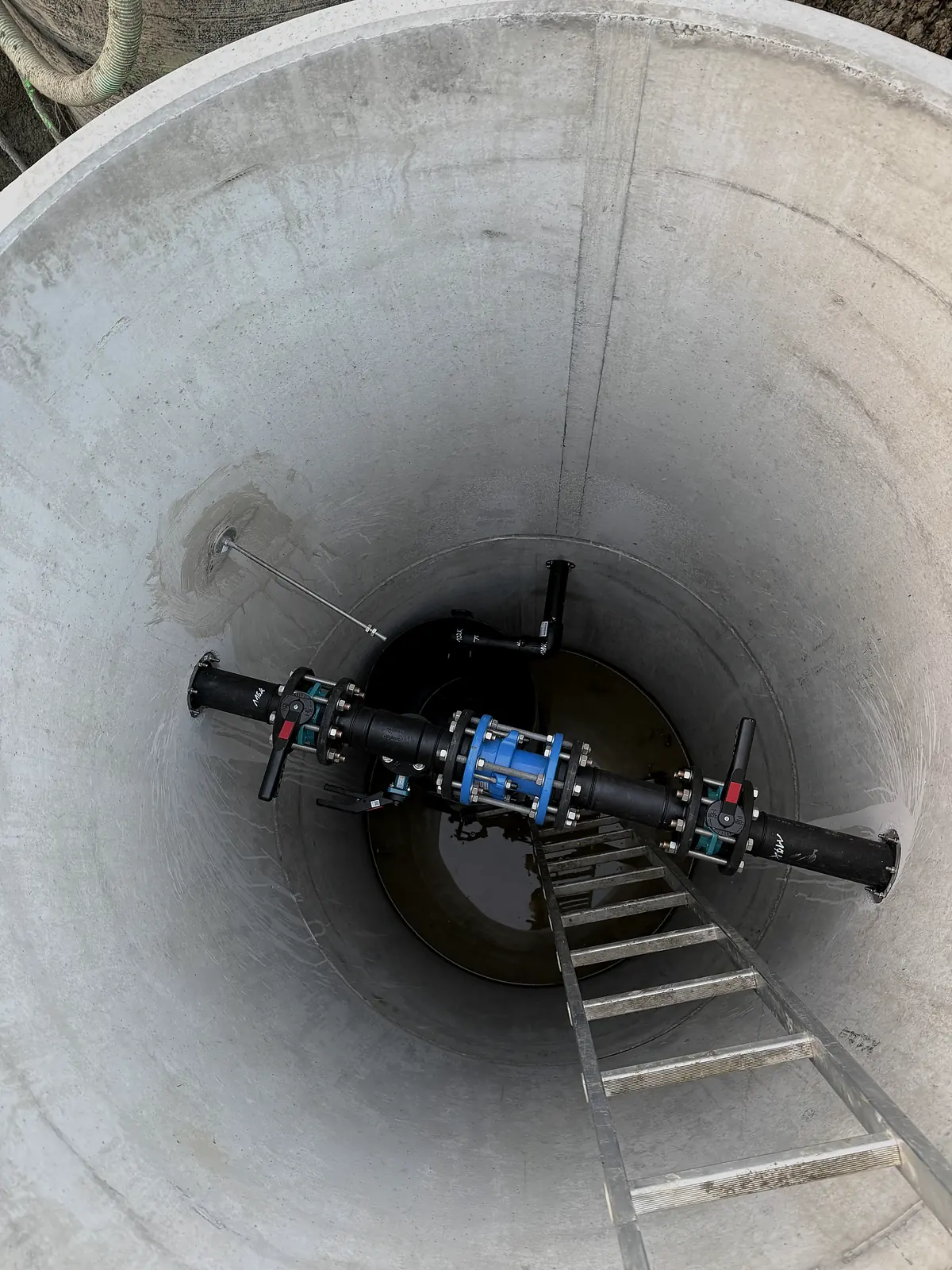
From our projects
Questions about electrofusion welding
Can you tie into a pipeline that is in operation?
A branch on a PE pipeline can be made with a tapping saddle. We will assess whether this is possible in your installation based on a description and photos.
Who supplies the fittings?
We can work with your fittings, or select and supply them ourselves from proven manufacturers. We agree this when preparing the quote.
Do you repair damaged PE pipes?
Yes. We cut out the damaged section and insert a new one using electrofusion couplers.
Can pipes from different manufacturers be welded together?
Usually yes, if the pipes and fittings are made of the same material and are compatible. We check this before starting work.
Other methods
-
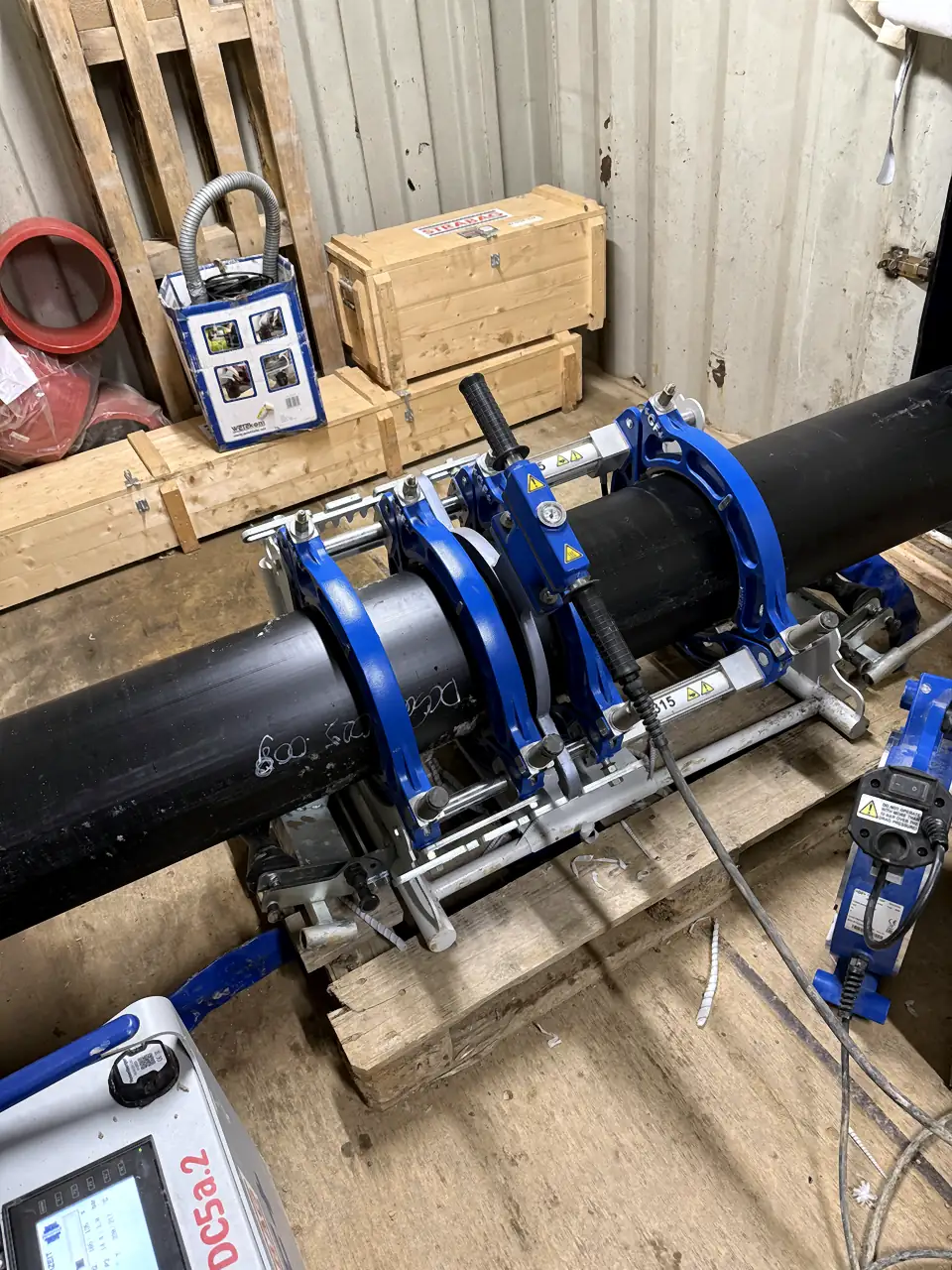 Butt fusion weldingPE and PP pipes and fittings joined end to end with a heater plate. The standard method for pipelines and manifolds.More about this method
-
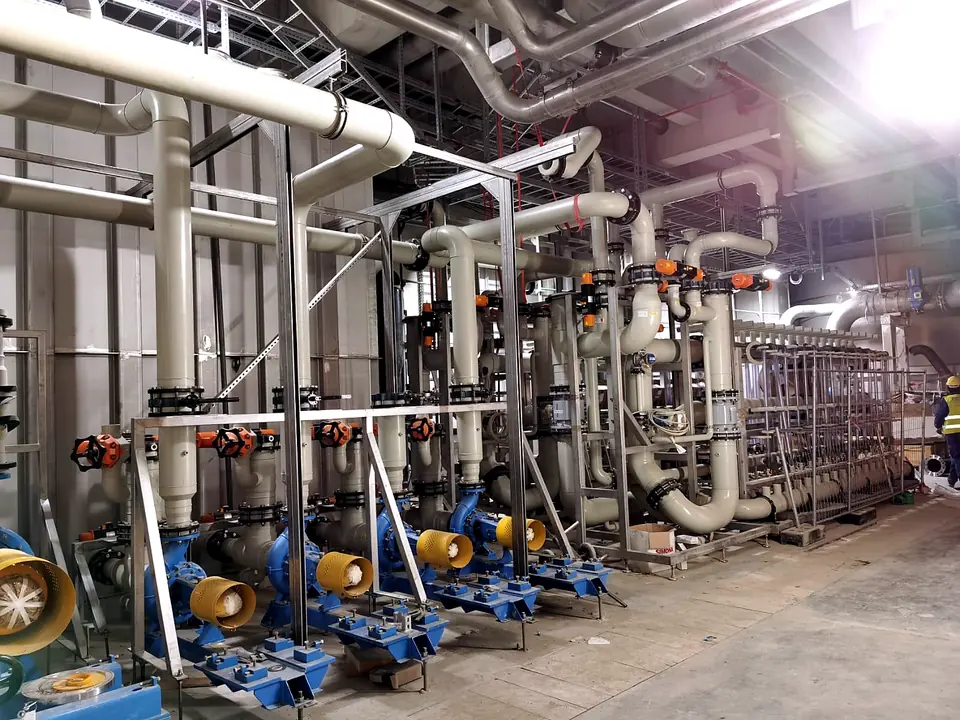 Infrared (IR) weldingHeating with an infrared emitter, without contact with a plate. Clean, repeatable PP and PVDF joints.More about this method
-
 Extrusion weldingA hand-held extruder feeds plasticised welding rod straight into the weld. For sheets and thicker components.More about this method
-
 PVC solvent weldingPVC pipes and fittings joined with solvent cement, without heat. Clear pipes too.More about this method
Send an enquiry about this method
Describe the installation and attach a drawing or photo. We will confirm the method in our quote.