
Solvent welding of PVC pipes and fittings
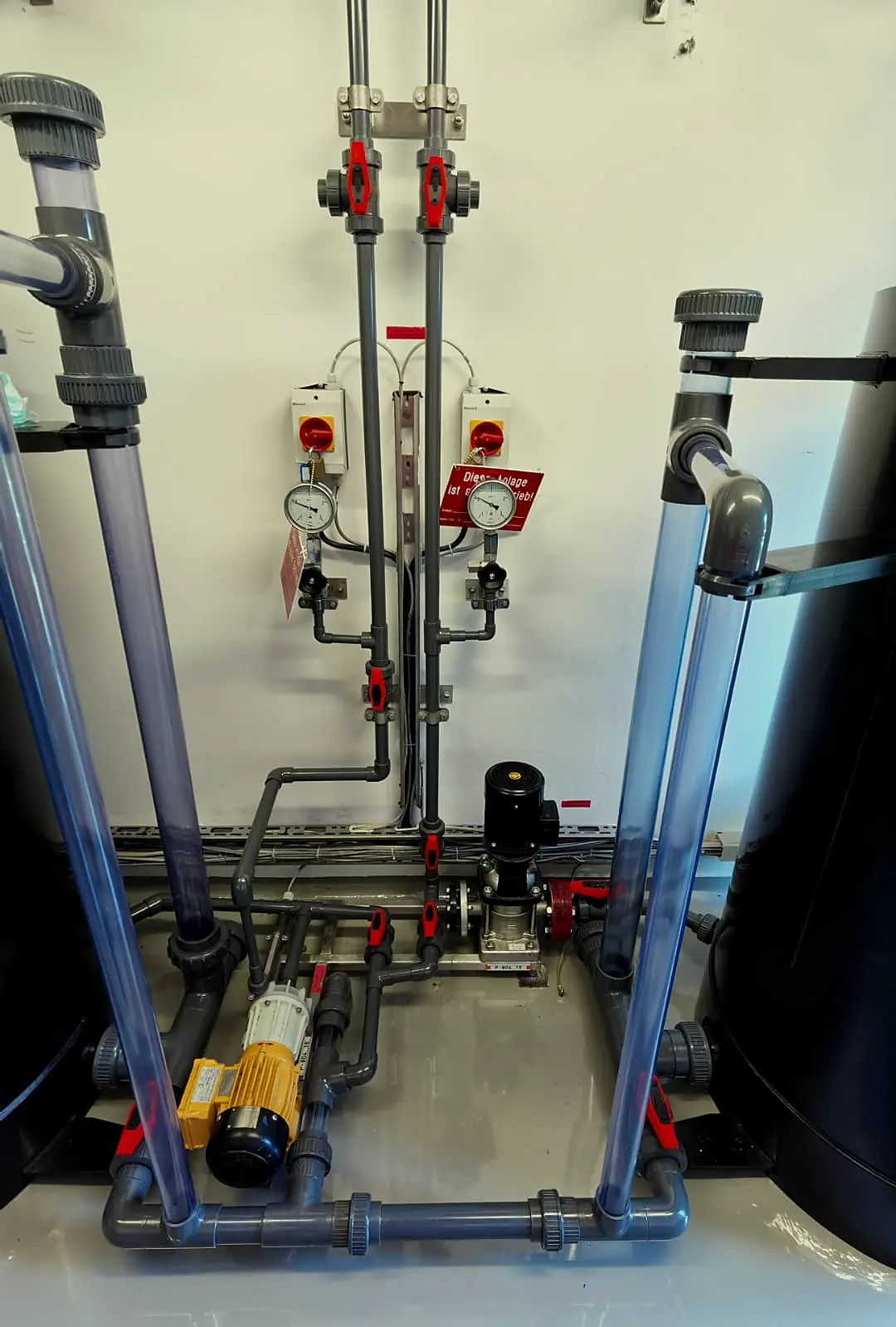
We join PVC pipes and fittings with solvent cement, without heat. This is how we build dosing and water treatment installations and clear PVC lines in which the medium stays visible.
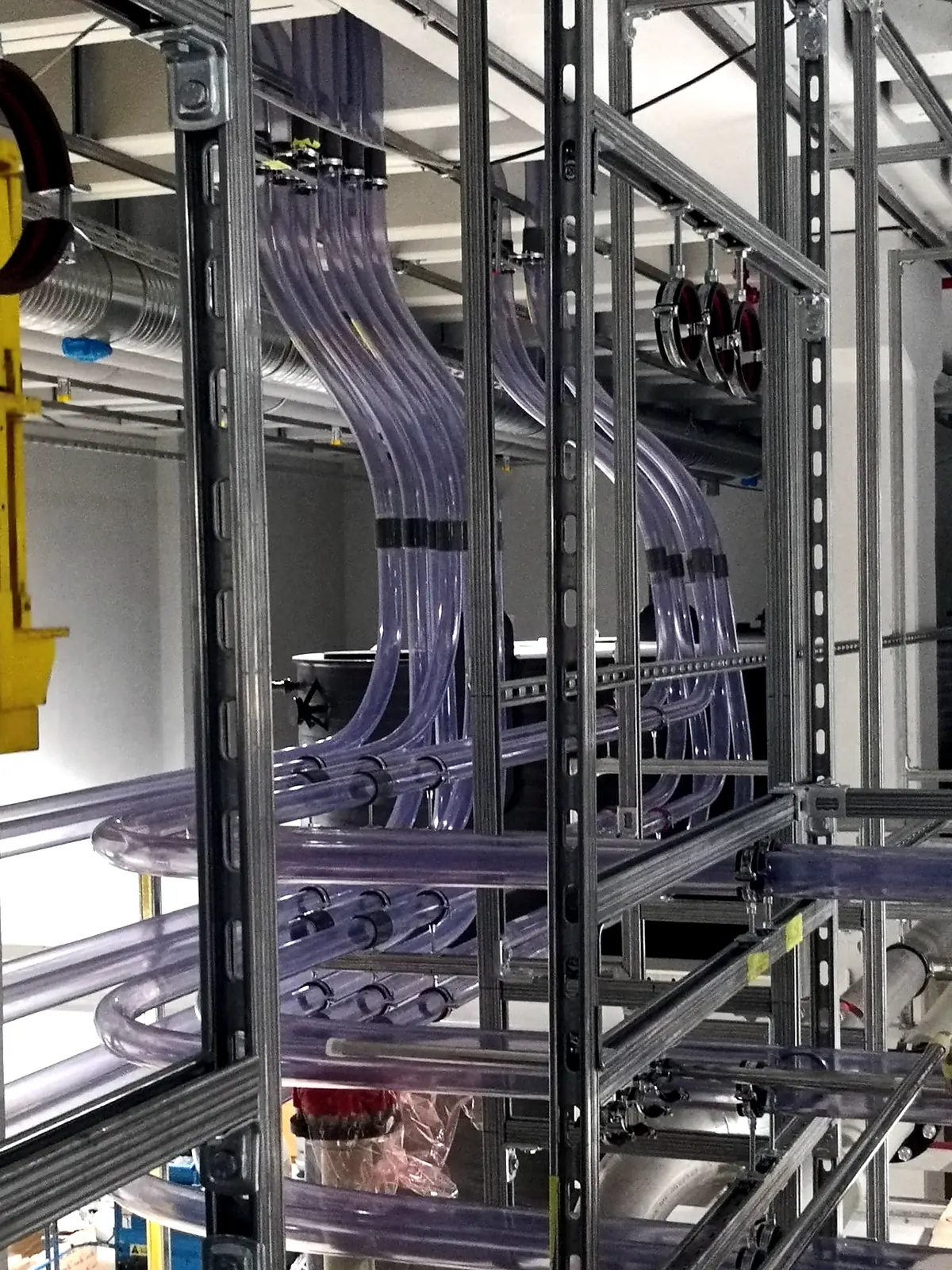
How PVC solvent welding works
The solvent cement softens the surface of the pipe and fitting. Once joined, both parts fuse into one, without heat and without a welding machine.
That is why solvent welding works well in tight cabinets, around valves and in installations with many small diameters. Clear PVC pipes also let you see the flow of the medium.
Quality depends on preparation: a square cut, chamfering, cleaning the surfaces and the curing time before the installation is loaded. We take care of this at every joint.
When to use this method
- chemical dosing and water treatment stations
- clear PVC lines where the medium must be visible
- cabinets and panels with valves
- installations with many small diameters
- repairs and extensions of existing PVC installations
When another method is better
- PE and PP pipelines: butt fusion or electrofusion welding
- PVDF installations for high-purity media: IR welding
- tanks and sheet components: extrusion welding
Materials
- PVC
- clear PVC
How solvent welding works step by step
- 01
Cut and chamfer
We cut the pipe square and chamfer its end so that no cement is wiped off when it is pushed in.
- 02
Clean the surfaces
We clean the pipe and the fitting socket with a cleaner that removes grease and dirt.
- 03
Apply the cement
We apply the cement evenly to the pipe and fitting, in an amount matched to the diameter.
- 04
Join the parts
We push the pipe fully home and hold it until the joint sets.
- 05
Cure and check
The installation is loaded only after the cement has cured. Then we check that it is leak-tight.
The curing time before testing depends on the diameter, temperature and type of cement.
Inspection and documentation
We check every joint after assembly: an even bead of cement around the joint shows that the pipe is fully inserted. Joints are documented in the record on the form for this method, and before handover we carry out a leak test. We hold DVS certificates and a TÜV certificate for this method.
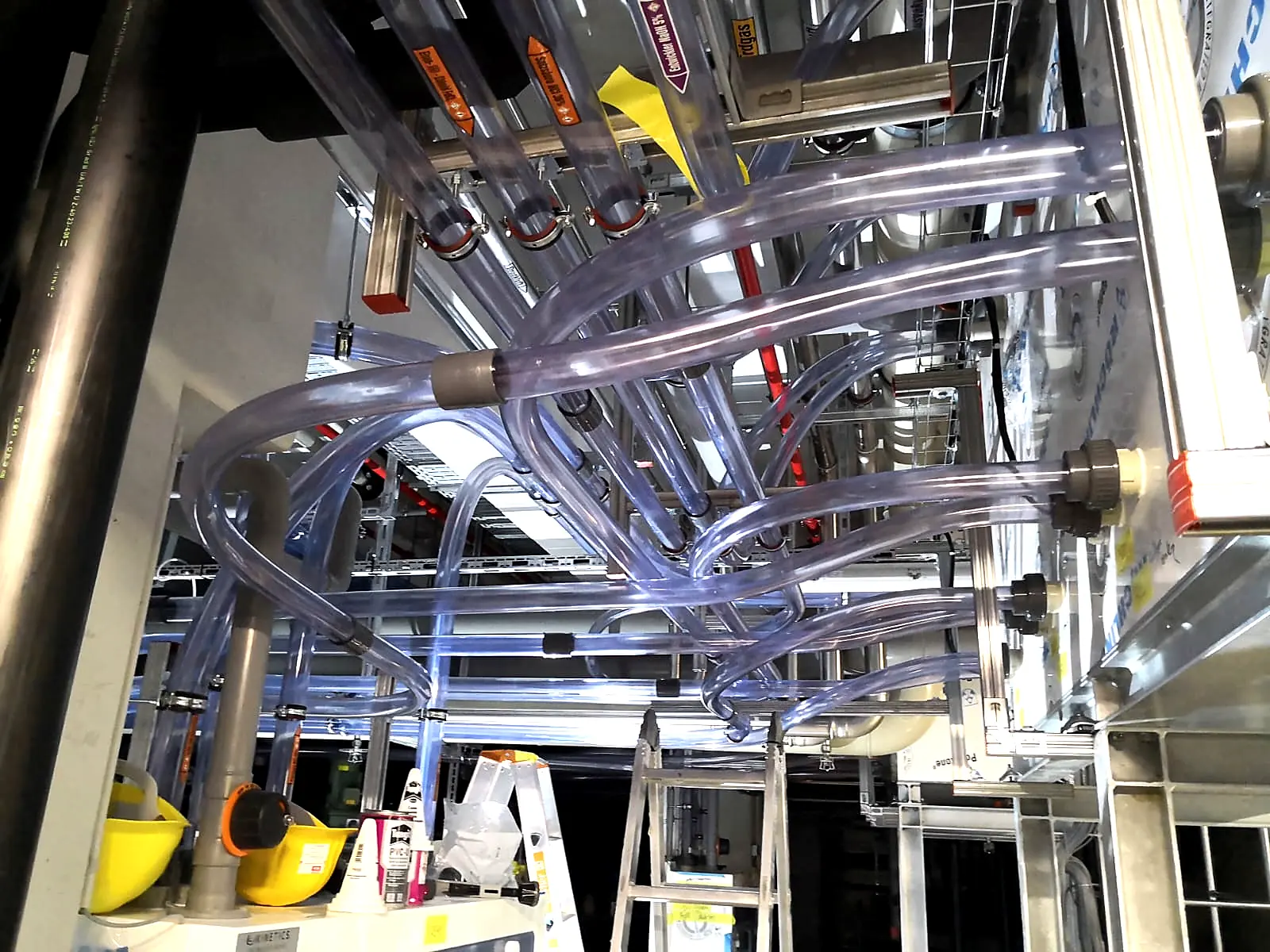
From our projects
Questions about PVC solvent welding
Is a solvent-welded joint durable?
Yes. A properly made solvent-welded joint stays leak-tight for the whole service life of the installation, provided the cement suits the medium and the surfaces are carefully prepared.
Do you also join clear PVC pipes?
Yes. Clear pipes make the flow visible, which is why they are often used in dosing installations and on inspection sections.
When can the installation be put into operation?
After the curing time given by the cement manufacturer and after the leak test. We build this time into the schedule.
Other methods
-
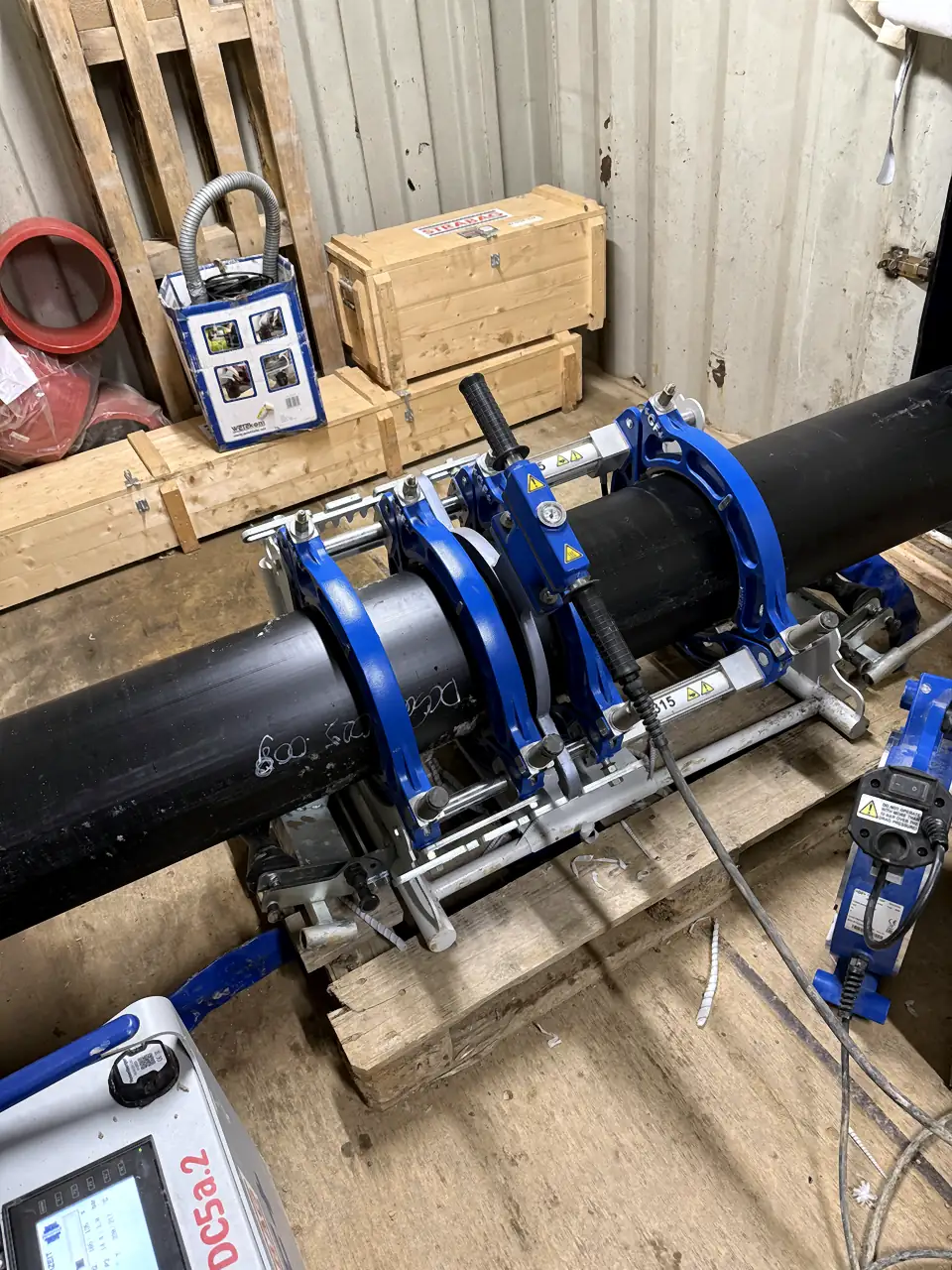 Butt fusion weldingPE and PP pipes and fittings joined end to end with a heater plate. The standard method for pipelines and manifolds.More about this method
-
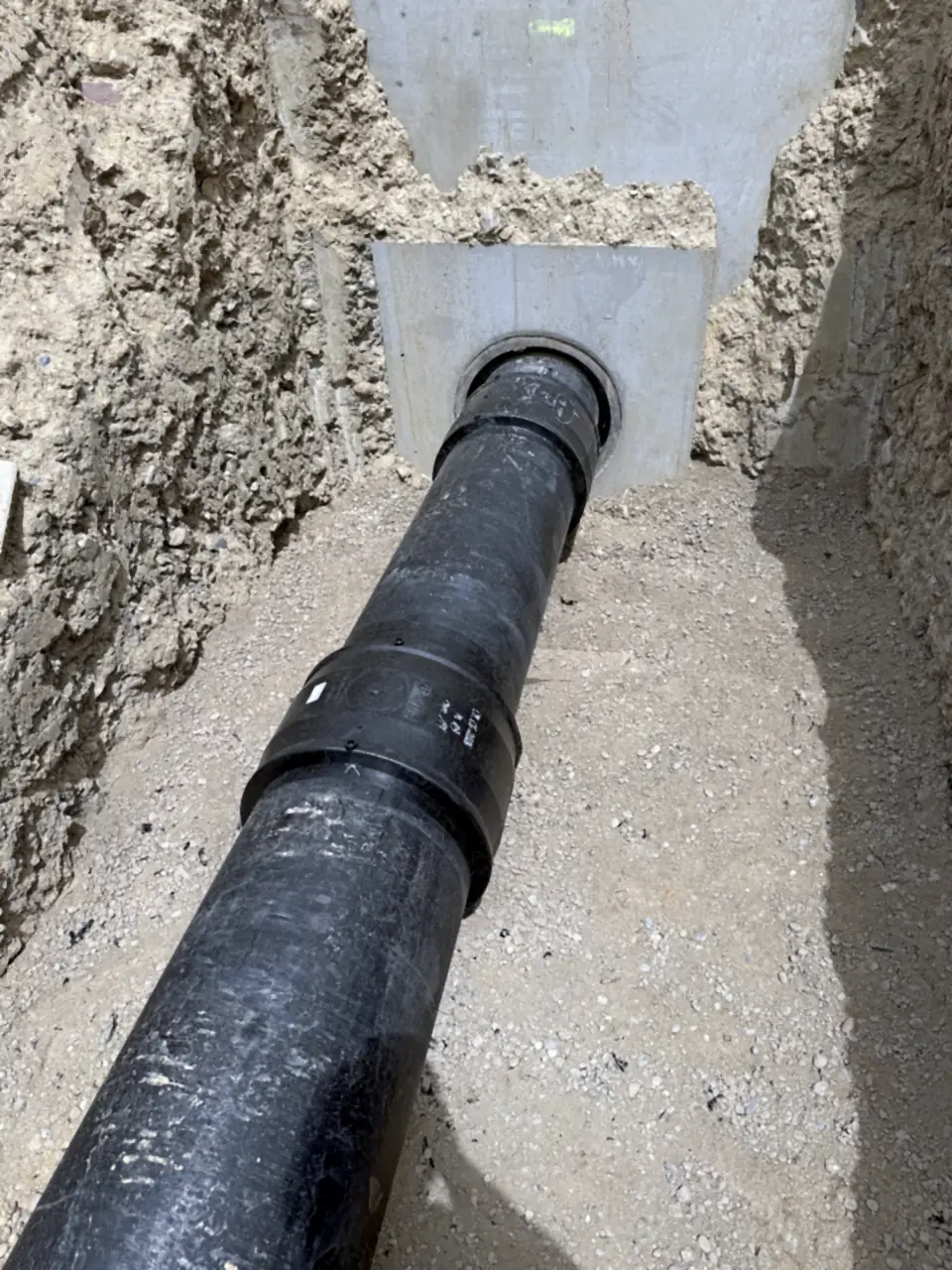 Electrofusion weldingA fitting with an embedded heating wire is fused by electric current. For places where a butt fusion machine will not fit.More about this method
-
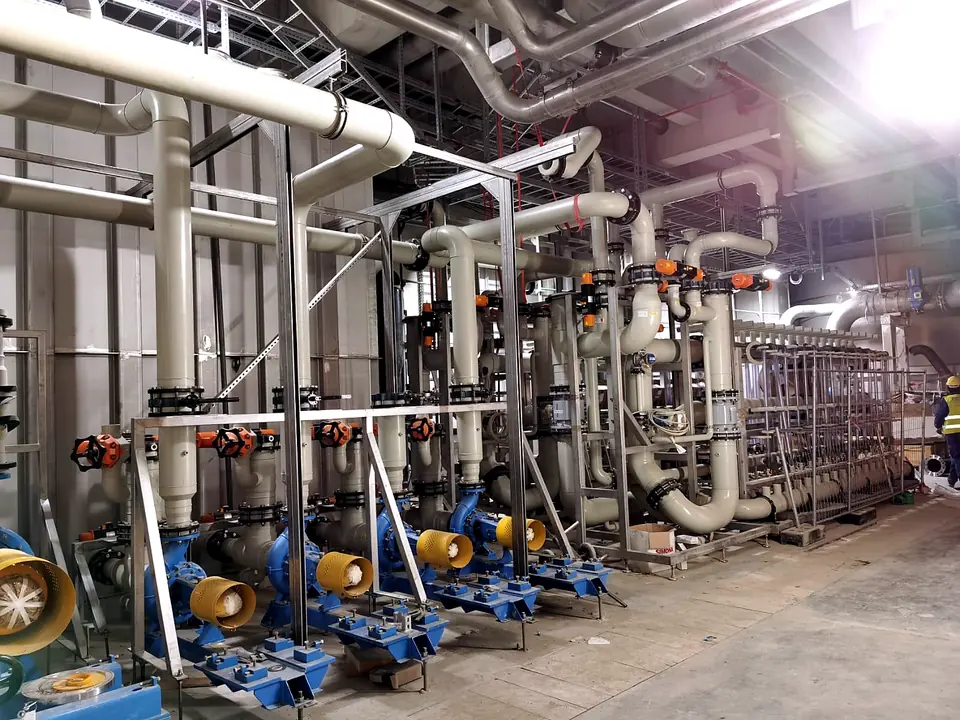 Infrared (IR) weldingHeating with an infrared emitter, without contact with a plate. Clean, repeatable PP and PVDF joints.More about this method
-
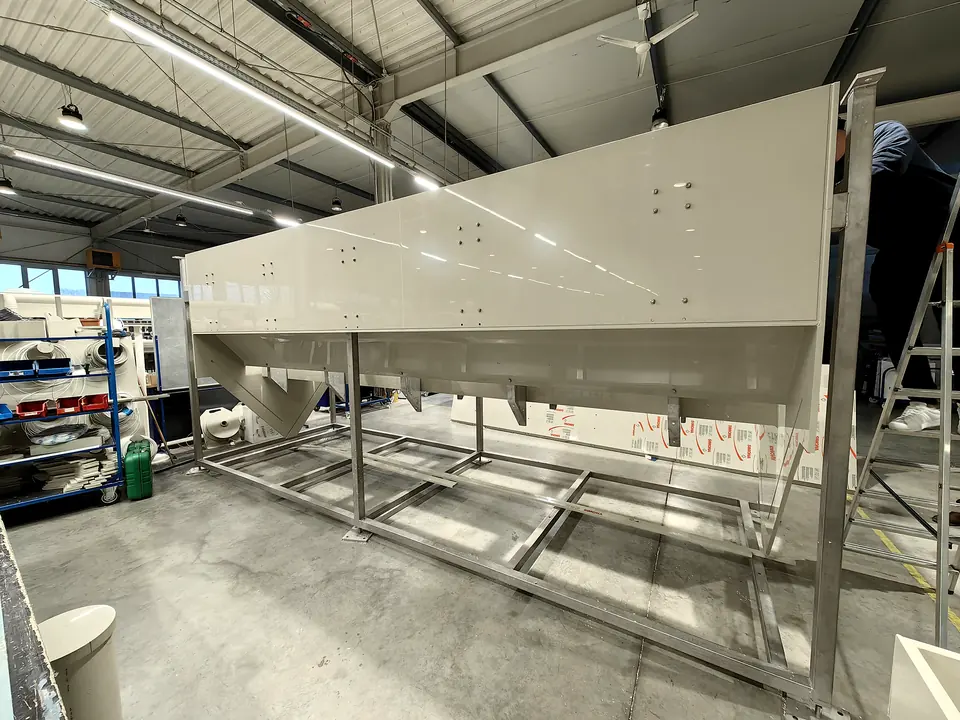 Extrusion weldingA hand-held extruder feeds plasticised welding rod straight into the weld. For sheets and thicker components.More about this method
Send an enquiry about this method
Describe the installation and attach a drawing or photo. We will confirm the method in our quote.